How to Take Peptides
U N S H A K E A B L E
PEPTALK · PEPTIDES UNPACKED
Built for the ones who don't slow down. Who expect a lot from their body.
Who are here to live better, longer.
How to Take Peptides: Injections, sprays, and what actually works
So you've heard about peptide therapy. You're intrigued by the potential — better metabolism, faster recovery, reduced inflammation, sharper cognition. Maybe you've even identified a specific peptide you want to learn more about.
Then someone mentions needles, and suddenly the conversation gets complicated.
Here's the good news: while injectable peptides are the gold standard, they're not your only option. And understanding why delivery method matters will help you make smarter decisions about where to start.
Why Most Peptides Are Injected
Peptides are larger molecules than your typical supplement. That size is actually the key to understanding why delivery method matters so much.
When you swallow a capsule or mix a powder into a drink, your digestive system gets to work on it immediately. For small molecules — like many vitamins and supplements — this is fine. They survive digestion and make it into your bloodstream intact.
Peptides, however, are strings of amino acids. Your digestive enzymes are very good at breaking those down — which is exactly what they're supposed to do with protein and protein-like compounds. The problem is, by the time a peptide reaches your bloodstream via oral ingestion, much of its active structure may already be broken down and rendered ineffective.
A small, shallow injection just beneath the skin — typically in the abdomen or thigh — is why subcutaneous delivery is considered the most effective and reliable method for most peptide therapies.
But I Really Don't Like Needles
You're not alone. The needles are very small — far smaller than what most people picture — and many users describe little to no discomfort after the first couple of tries.
That said, if injections are a firm boundary for you, there are alternatives worth knowing about.
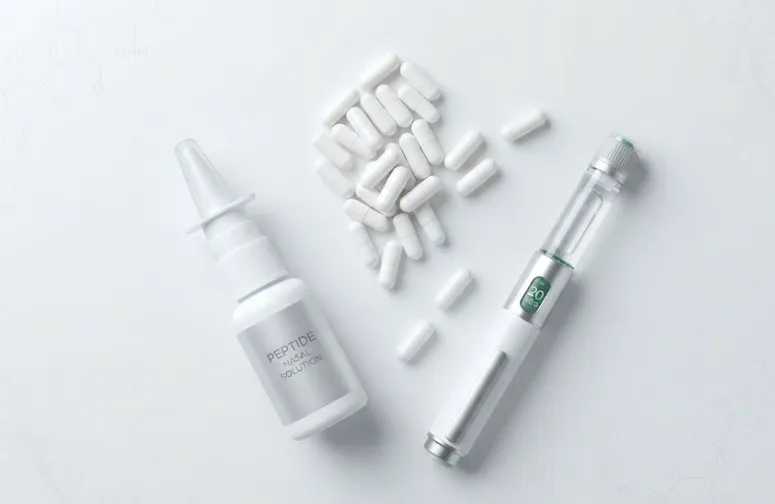
With the surge in popularity has come a surge in people using GLP-1 peptides without real guidance — The honest take: you can still experience benefits from oral or nasal peptides, especially at the right doses and with the right compounds. They're a meaningful option for people who can't or won't inject. Just go in with realistic expectations about efficacy compared to subcutaneous delivery.
What About Topical Peptides?
Worth a brief mention: topical peptide creams and serums have become popular in skin care, and this is one area where topical delivery makes legitimate sense. Skin-targeted peptides — for collagen stimulation, wound healing, or anti-aging — are designed to work locally, so they don't need to reach the bloodstream to be effective. This is a different category from systemic peptide therapy, but it's a valid one.
Where to Start
Before choosing a delivery method, the more important question is: which peptide, and for what goal? Different peptides work differently in the body, and the right starting point depends on your health history, your goals, and ideally, guidance from a practitioner who understands peptide therapy.
The Bottom Line
Subcutaneous injection remains the most effective delivery method for most peptide therapies — but it's not the only path forward. Nasal sprays and oral capsules offer real alternatives for those who need them, with the understanding that absorption and efficacy may vary.
Here to help you become Unshakeable,

Dr. Kylie
This blog is based on Episode 1 of PepTalk: Peptides Unpacked, hosted by Dr. Kylie Burton and Jessica Briecke.
Learn more at drkylieburton.com
Legal Disclaimer: Every person's health journey is unique. The experiences shared here are real stories from real people working with medical professionals. Your results may differ. Peptide therapy is a prescription treatment that requires doctor supervision. We partner with a telemedicine company that provides access to licensed physicians to assist you in your peptide therapy journey.