
Karli Lost 55 Pounds in 5 Months
U N S H A K E A B L E
PEPTALK · PEPTIDES UNPACKED
Built for the ones who don't slow down. Who expect a lot from their body.
Who are here to live better, longer.
Karli Lost 55 Pounds in 5 Months. Here's What She Did Differently
More than six million Americans are now using GLP-1 medications. But less than ten percent actually understand how these peptides work beyond the number on the scale. Karli Sine is one of the people who took the time to understand — and it made all the difference.
Karli Sine — 55 pounds down, and a version of herself she didn't know was possible.
Two and a half years ago, Karli was a postpartum mom with PCOS, insulin resistance, a lifelong struggle with her weight, and a primary care doctor who handed her a semaglutide prescription and said, essentially, good luck. She had no nutritional guidance, no dosing support, and no community.
What she had was research, determination, and a willingness to figure it out. Today she's down 55 pounds, maintaining on a microdose, running to the park with her kids, and describing a version of herself she didn't know was possible. This is her story — and what anyone considering GLP-1 therapy can learn from it.
The Starting Point: PCOS, Insulin Resistance, and a Google Rabbit Hole
Karli first heard about semaglutide the way a lot of people did — through celebrity gossip. It was being called "the Kardashian drug," and she wasn't entirely sure what that meant. But she's a researcher by nature, and when a friend mentioned it, she started digging.
What she found changed the frame entirely. Karli had been diagnosed with PCOS and knew, vaguely, that it was connected to insulin. But when she started reading about how semaglutide affected insulin signaling and blood sugar regulation, something clicked. This wasn't just a weight loss drug. It was addressing the root of what her body had been struggling with.
She went to her primary care physician. He had never prescribed it. He gave her a prescription with no guidance, wished her luck, and sent her on her way. It then took three months to find a pharmacy that could fill it. She started anyway.
The First Weeks: Rewiring a Lifetime of Food Habits
Karli was a quick responder — within the first week, the medication was already working. But the early weeks were still rough, and not for the reasons most people expect.
The side effects weren't primarily from the peptide itself. They were from the collision between a new physiological reality and decades of ingrained eating habits. She had started on a microdose, but she was still eating the way she always had — finishing her plate, eating carbs first, pushing through fullness signals she had never experienced before.
Learning to hear those signals — and trust them — was the real work of the first phase. So was hydration. Many of her early side effects, she now believes, were primarily from not drinking enough water rather than from the medication itself.
Protein First: The Shift That Changed Everything
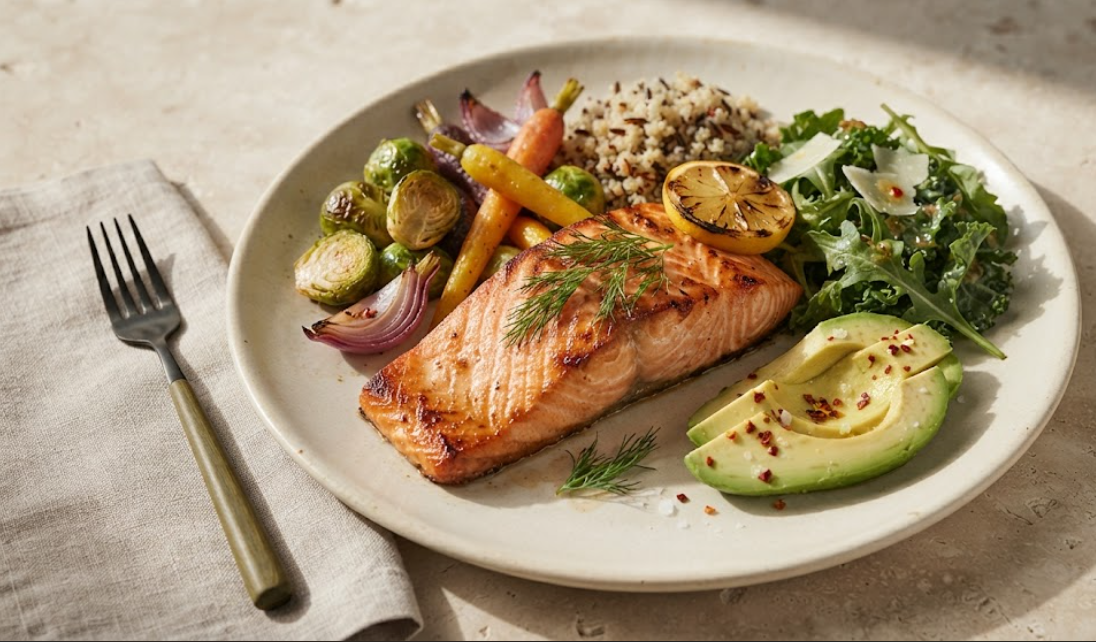
The single most important nutritional discovery of Karli's journey was deceptively simple: eat protein first.
On GLP-1 therapy, stomach emptying slows and fullness arrives faster. That means the first few bites of a meal carry more weight than they ever did before — because they may be the only bites that feel comfortable. If those first bites are bread, pasta, or a salad, the opportunity to get meaningful nutrition is already gone.
Karli began making protein the non-negotiable first item on every plate. Chicken, beef, fish, eggs — whatever the meal, protein came first. Everything else was secondary.
This shift protected her muscle mass during rapid weight loss, kept her satiated longer, and gave her body the raw materials it needed to actually heal rather than just shrink.
55 Pounds in 5 Months — and What That Really Meant
Karli lost her full 55 pounds in approximately five months. By any measure, that's fast — and the people around her noticed. Some were concerned. She was anything but.
One of the unexpected gifts of the weight loss was what it did for her relationship with movement. Before, working out felt like a battle against her own body — she'd watch people do exercises she couldn't fathom doing herself. As the weight came off, that changed dramatically.
"It was so much easier to work out that I actually wanted to work out," she says. "I could finally focus on building muscle and toning up. I could physically move my body — it was easier. And that was one of the coolest parts."
She became intentional about building muscle alongside the fat loss — protecting the gains she'd worked for by prioritizing protein, staying hydrated, and moving consistently.
The Relationship Transformation Nobody Talks About
Weight loss stories tend to focus on the physical. Karli's most powerful changes were emotional.
She describes herself as always having been outgoing and confident on the surface — but underneath, there was a running commentary that most people never heard. She would delete photos rather than keep memories that showed her body. She would position herself in group photos to hide. She would look at her husband — fit, tall, strong — and quietly wonder why he was with her.
As her health improved, that inner voice changed. The self-criticism quieted. Her marriage deepened. She started running to the park with her kids instead of watching from the sideline. She discovered she didn't even know what her own style was — she'd been hiding in baggy clothes for so long that she had to learn, from scratch, how to dress a body she finally felt good in.
"Every single aspect of my life changed," she says. "And it all changed for the better."
Two and a Half Years Later
Karli has maintained her results for over two years. She is currently on a microdose of tirzepatide — 2.5mg once a week — which is the same dose many people start at. She switched from semaglutide to tirzepatide during her maintenance phase and noticed immediately that the subtle, persistent nausea she had mistaken for the medication "working" simply disappeared. Tirzepatide worked better, more comfortably, with fewer side effects.
Her husband, diagnosed with Parkinson's disease at 33, is also on a low-dose GLP-1 — not for weight loss, but for the neuroprotective and anti-inflammatory effects that emerging research suggests may slow disease progression.
Karli now coaches others through their own GLP-1 journeys, bringing to them the guidance she never had. Her message is consistent: the peptide opened the door. The protein, the water, the mindset, and the patience are what kept it open.
The bottom line
Karli's story is a reminder that the peptide is only one part of the equation. Protein-first eating, hydration, patience with her body's new signals, and a willingness to rebuild her relationship with movement and food were what made her results sustainable for two and a half years and counting.
Here to help you become Unshakeable,

Dr. Kylie
This blog is based on Episode 6 of PepTalk: Peptides Unpacked, hosted by Dr. Kylie Burton and Jessica Briecke.
Learn more at drkylieburton.com
Legal Disclaimer: Every person's health journey is unique. The experiences shared here are real stories from real people working with medical professionals. Your results may differ. Peptide therapy is a prescription treatment that requires doctor supervision. We partner with a telemedicine company that provides access to licensed physicians to assist you in your peptide therapy journey.