
The Three Foundations
U N S H A K E A B L E
PEPTALK · PEPTIDES UNPACKED
Built for the ones who don't slow down. Who expect a lot from their body.
Who are here to live better, longer.
The Three Foundations to Build Before Your Peptides Arrive
Peptide therapy amplifies what's already happening in your body. Which means the stronger your foundation when you start, the better and faster your results will be. And the weaker your foundation, the more work the peptide has to do — and the less sustainable the results.
The good news: there are three foundational changes that make an outsized difference, and you can start all three before your first shipment arrives. They're not complicated. They don't require a gym membership or a meal prep service or a complete lifestyle overhaul. They just require intention — and a little patience with yourself as you build the habit.
Here's exactly what to do, with the specific numbers that matter.
Foundation #1
Hydration
Water is the most underrated variable in metabolic health — and one of the first things that needs to be dialed in before peptide therapy begins.
The math is simple. If you weigh 160 pounds, you need 80 ounces of water daily. If you weigh 130 pounds, you need 65 ounces. It sounds like a lot until you realize most people are getting somewhere between 20 and 40 ounces on a typical day.
Why Electrolytes Matter
Here's the part most people miss: water alone isn't enough. Without adequate minerals — particularly sodium, magnesium, and potassium — the body can't actually use the water you're drinking. It passes through without hydrating the cells. A pinch of quality salt in your water, a low-sugar electrolyte packet, or a mineral supplement ensures the water you drink is actually doing its job.
How to Get There Without Overwhelming Your System
Don't jump from 20 ounces to 80 overnight. Titrate up gradually — add 10 to 15 ounces every few days. Your body needs time to adjust, and going too fast will have you running to the bathroom every 20 minutes, which discourages the habit before it's formed.
Keep a water bottle visible on your desk — out of sight, out of mind is a real phenomenon
Fill it the night before so morning friction is removed
Add lemon, lime, cucumber, or electrolytes if plain water doesn't appeal to you
Note: coffee doesn't count — it's a diuretic and works against hydration
Many supplement drinks do count — if it's mixed with water, it contributes to your intake
Start where you are. Add a little more each day. By the time your peptides arrive, you'll already be close to target — and your body will be primed to respond.
Foundation #2
Protein
Protein is the raw material your body uses to build muscle, repair tissue, produce peptides, support immune function, and maintain the metabolic rate that keeps results sustainable. It is the single most important macronutrient to prioritize — not just during peptide therapy, but always.
Here's how that math works in practice: if you currently weigh 200 pounds but your healthy goal weight is 150 pounds, aim for around 150 grams of protein per day. That's not your current weight — it's your target weight. This approach ensures you're fueling the body composition you're building toward, not the one you're leaving behind.
What That Looks Like on a Plate
Protein should take up close to half your plate at every meal. Everything else — vegetables, complex carbohydrates, healthy fats — fills in around it. And protein always comes first, before you fill up on anything else.
Practically, three meals with 30 to 35 grams of protein each gets you to 90 to 105 grams per day — a solid foundation. From there, protein-rich snacks can bridge the gap to your target.
Sources That Work
Chicken breast, turkey, lean beef, fish, and eggs are the most efficient whole-food protein sources
Greek yogurt and cottage cheese are excellent high-protein dairy options
Protein shakes and powders are legitimate tools for hitting targets when whole food isn't practical
Legumes, edamame, and tofu contribute protein alongside fiber — useful additions but not complete replacements for animal protein
Most people, when they honestly assess their intake, discover they're getting roughly a third of the protein they need. That gap is one of the primary reasons GLP-1 therapy leads to muscle loss and metabolic slowdown when nutrition isn't addressed alongside it.
Foundation #3
Fiber
Fiber is the foundation of gut health — and gut health is the foundation of almost everything else. Fiber feeds the beneficial bacteria in the microbiome, supports regular elimination, slows glucose absorption, and reduces systemic inflammation. It's also where most people are most deficient, often without realizing it.
The average American gets 10 to 12 grams. The gap is significant.
Why Elimination Matters More Than You Think
Here's the question Jessica Briecke asks every client: are you pooping every day? Not every two days. Not every three. Every day.
If the answer is no — and for many people it isn't — that's a signal that the gut is not moving waste efficiently. Toxins that should be leaving the body are sitting in the colon. The microbiome is likely out of balance. And the digestive environment where many peptides are produced is compromised.
Daily bowel movements aren't a nice-to-have. They're a functional requirement for a body that's detoxifying properly and producing the signaling molecules it needs.
How to Increase Fiber Without the Consequences
This is critical: do not jump from 10 grams of fiber to 35 grams overnight. The gut bacteria that process fiber need time to adapt. Too much too fast causes bloating, gas, and discomfort that makes people give up before the habit forms.
Instead, add 3 to 5 grams more per week. Slow and steady — the same philosophy that applies to peptide dosing.
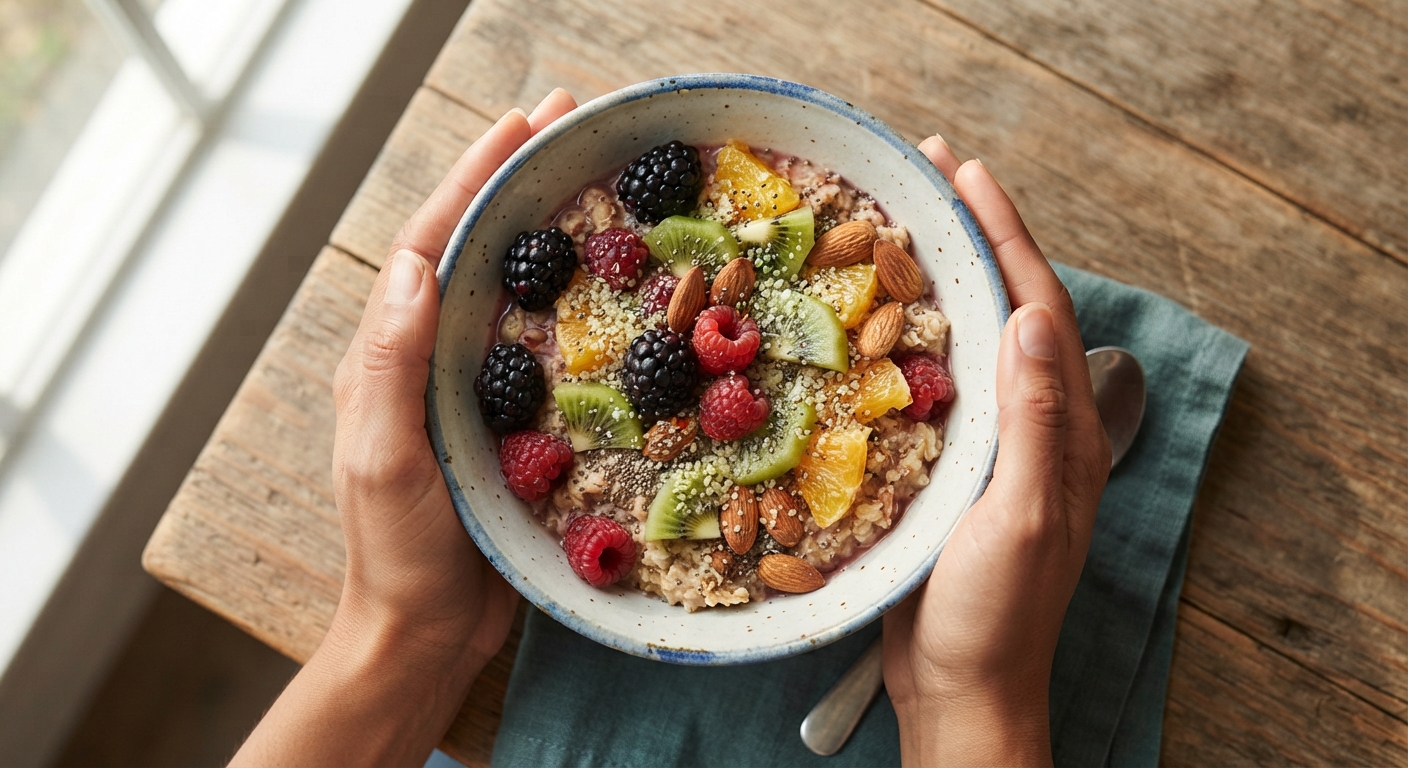
Prioritize whole food fiber sources: vegetables, legumes, berries, chia seeds, flaxseed, and whole grains
A seed-based fiber supplement (like psyllium husk or a seed blend) taken consistently is a clean and effective way to bridge gaps
Fiber and water work together — increasing fiber without increasing water can make constipation worse, not better
Avoid processed fiber supplements loaded with additives; keep it clean and simple
The Three Together
Here's what's powerful about these three foundations: they work synergistically. Water helps fiber do its job. Protein supports the muscle that makes metabolism work. Fiber feeds the gut where peptides are produced. Improving all three simultaneously creates a ripple effect that touches nearly every system in the body.
And here's the practical summary — three changes to start today:
The Bottom Line
Peptide therapy is most powerful when it has something to amplify. These three foundations — water, protein, and fiber — are the foundation it needs. Start building them now, and by the time your first shipment arrives, your body will already be in a better position to respond.
Here to help you become Unshakeable,

Dr. Kylie
This blog is based on Episode 8 of PepTalk: Peptides Unpacked, hosted by Dr. Kylie Burton and Jessica Briecke.
Learn more at drkylieburton.com
Legal Disclaimer: Every person's health journey is unique. The experiences shared here are real stories from real people working with medical professionals. Your results may differ. Peptide therapy is a prescription treatment that requires doctor supervision. We partner with a telemedicine company that provides access to licensed physicians to assist you in your peptide therapy journey.